AI agent vs chatbot: the difference that matters
Two 2026 surveys on the same subject produced numbers that refuse to line up. Sinch polled 2,527 executives and found that 76% of Brazilian companies run AI agents in production, above the 62% global average. A Boston Consulting Group study cited in GFT Tech Trends 2026 LATAM puts the figure at 18% for companies that have actually wired agents into their workflows.
Both can be right at once. The gap sits in who answers and what that person calls an agent. Much of what got installed over the past two years is a chatbot with a language model behind it: far better at conversation, understands slang, misreads less. And still unable to execute anything.
That naming confusion costs money. You approve a project expecting work to get done and you receive something that answers beautifully instead.
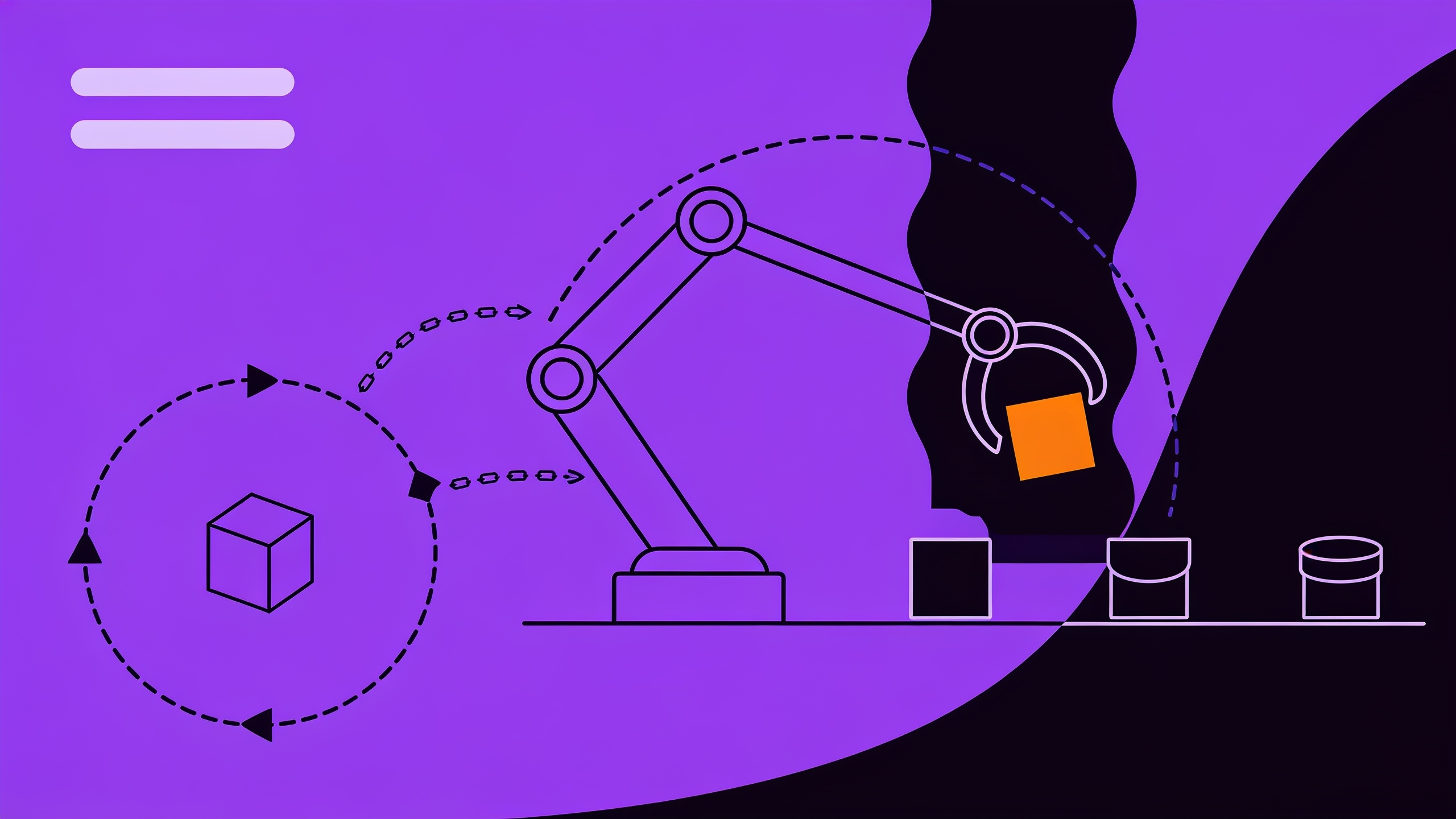
The difference in one line: a chatbot talks, an AI agent acts. A chatbot takes a message and returns an answer, whether by rule or by generated text. An agent takes a goal, decides the sequence of steps on its own, uses tools and systems to carry them out, and loops until the job is done or it needs help.
What actually makes something an AI agent
Plenty of academic definitions are floating around. In practice, three capabilities separate an agent from a well-trained chatbot. Miss one and what you have is a chatbot.
1. Tool access. The agent can call something outside itself: an API, a SQL query, the CRM, the ad manager, an email send. Without that, it only knows what sits in the prompt and in its training data.
2. It picks the sequence. A chatbot follows a flow someone drew in advance. An agent decides, at each step, what the next one should be, based on what it just learned. If the first query comes back empty, it tries another. This is the part most buyers underestimate.
3. A stopping rule. An agent judges its own output and decides whether it is finished, should retry, or should hand the problem to a human. Without that, you get a robot that loops forever or ships whatever it has as if it were the answer.
Notice that none of this concerns conversation quality. An agent may have no chat interface at all. Many of the best ones run quietly, triggered by a schedule or by an event in a system.
So are chatbots obsolete now?
No, and anyone selling an agent for every job is overselling. Chatbots solve one problem well: repeated questions with a stable answer. Opening hours, return policy, order status, a duplicate invoice. In those cases predictability is worth more than intelligence.
A well-built chatbot has three real advantages over an agent: it costs less per interaction, you know exactly what it will say, and it does not improvise. For a company answering 4,000 identical messages a month, that is not a small thing.
The common mistake is not using a chatbot. It is using a chatbot for a task that demands reading context and acting in a system, then concluding that "AI does not work for our case."
AI agent vs chatbot: side by side
| Criterion | Chatbot | AI agent |
|---|---|---|
| Input | A message | A goal or an event |
| Path | Flow defined by a person | Chosen step by step by the agent |
| System access | Occasional reads, where integrated | Reads and writes across several tools |
| Output | Text | A completed action, record or report |
| On failure | Falls off the script and stalls | Tries another route or escalates |
| Cost per run | Low and stable | Higher and variable |
| Best fit | Repeat question, fixed answer | Multi-step task, scattered data |
That cost line deserves attention. An agent that queries three systems and reasons about the results consumes far more than an FAQ reply. It pays off when the task would cost someone 40 minutes, not when it replaces a click.
How to tell whether you were sold an agent or a chatbot
Three questions settle it inside a sales call. They are uncomfortable on purpose.
- Which systems does it write to, not just read from? If the answer is "it searches our knowledge base," that is a chatbot. An agent creates the record, updates the field, schedules the follow-up.
- Who decides the order of the steps? If there is an approved flowchart describing every possible branch, you are buying automation with natural language on the front. That has value, it is just not an agent.
- What happens when it cannot do the job? A good answer is concrete: it tries a second approach, logs what it attempted, opens a ticket for the team with full context. A bad answer is "then it says it did not understand."
There is a faster fourth test: ask to see the log of a real run. In an agent, the log shows a different sequence of decisions and tool calls for each case. In a chatbot, it shows the same path every time.
A worked example
A building-materials distributor shipping 90 orders a day gets the same question all day on WhatsApp: "has my order left yet?" The chatbot checks status in the ERP and answers. It resolves 70% of cases in 8 seconds. Good deal.
Now the order is late. The customer wants to know why, whether waiting is worth it, and whether they can swap the item for something in stock. That requires reading the order in the ERP, checking stock on alternatives, pulling the customer price tier, calculating the difference and recording the change. Five systems, one judgment call.
Today that path eats roughly 12 minutes of a sales rep time. At 18 delayed orders a day, that is 3 hours and 36 minutes daily, close to half a person doing nothing but reacting to delays. That is the band where an agent pays for itself, not the 8-second question. The figures here are a simulation to illustrate the arithmetic, not a measured case.
What has to be in place before you hire an agent
Here is the part nobody puts in the proposal. An agent only beats a chatbot if it has somewhere to act, and that depends on your house, not on the vendor.
First, the data has to be reachable. If the sales number lives in a spreadsheet the manager updates on Friday, the agent will act on information five days old. Worth reading how siloed data sabotages any automatic decision, and what the routes for integrating data across systems look like.
Second, permissions. An agent that acts needs write credentials, and that opens a security conversation that routinely stalls projects for weeks. Start with the narrowest possible scope: one system, one action, a value cap.
Third, a definition of quality. If you cannot say what a good run looks like, you cannot evaluate the agent or correct it. It is worth revisiting what AI agents are before drawing the scope, and the sales use cases for AI already running out there.
Frequently asked questions
What is the difference between an AI agent and an AI assistant?
An assistant works with you: it suggests, drafts, summarizes, and you approve each step. An agent works in your place inside a defined scope and only calls you when a decision is needed. In practice, many products labeled assistants already behave like agents on small tasks.
What is the difference between an AI agent and an LLM?
The LLM is the language engine: given text, it predicts what comes next. The agent is the system built around that engine, with tools, memory, stopping rules and permission to execute. An LLM on its own cannot query your CRM or update an order.
Does an AI agent replace a chatbot in customer service?
Usually the two coexist. The chatbot keeps handling repeat volume, cheaper and predictable, and routes to the agent the cases that need lookups across several systems or an actual action. Replacing everything at once tends to raise cost without moving the metric.
Do I need to code to use an AI agent?
To build one from scratch, yes. To use one, less and less: there are platforms where you describe the goal in plain language and connect data sources through an interface. The barrier today is more organizational than technical.
How do I measure whether the agent is working?
Pick two numbers before switching it on: share of tasks completed without human intervention, and average time per task. If completion sits below 60%, the scope is too wide and you have built a review queue instead of automation.
The right question is not which of the two
Chatbots and agents are not competing for the same work. They compete for your budget, which is why the names get blended in proposals. The useful question is not "which is better" but: does this task need an answer or an execution? If an answer settles it, chatbot. If someone on your team would have to open three systems to settle it, then an agent is worth discussing.
And the obvious part is worth stating: both depend on having reachable data. That is where Sherlok fits. You connect Meta Ads, Google Ads, GA4, your CRM and spreadsheets, ask what you want to know in plain language and get the analysis back, without waiting for someone to assemble a report. Before automating the action, it helps to be able to see the number.
Want to see this in your own data?
Connect your accounts and ask your first question in 5 minutes.
- No card to start
- Nothing changes in your accounts without your approval