
Multi-agent AI: when one agent isn’t enough
You asked an AI agent for the weekly marketing report. It read Meta Ads, Google Ads, GA4, the sales spreadsheet and the CRM. By the fifth source, it had already lost track of what it saw in the first. The output looked polished and was wrong: Google’s ROAS had been calculated against last month’s revenue.
The model wasn’t the problem. The problem was asking a single agent to be a media analyst, a product analyst, a sales analyst and a finance analyst at once, with limited working memory. That is exactly where multi-agent AI comes in.
The good news: you can understand the concept without writing a line of code. The bad news: splitting work across agents costs more and creates new problems. It pays to know when it’s worth it.
What is multi-agent AI?
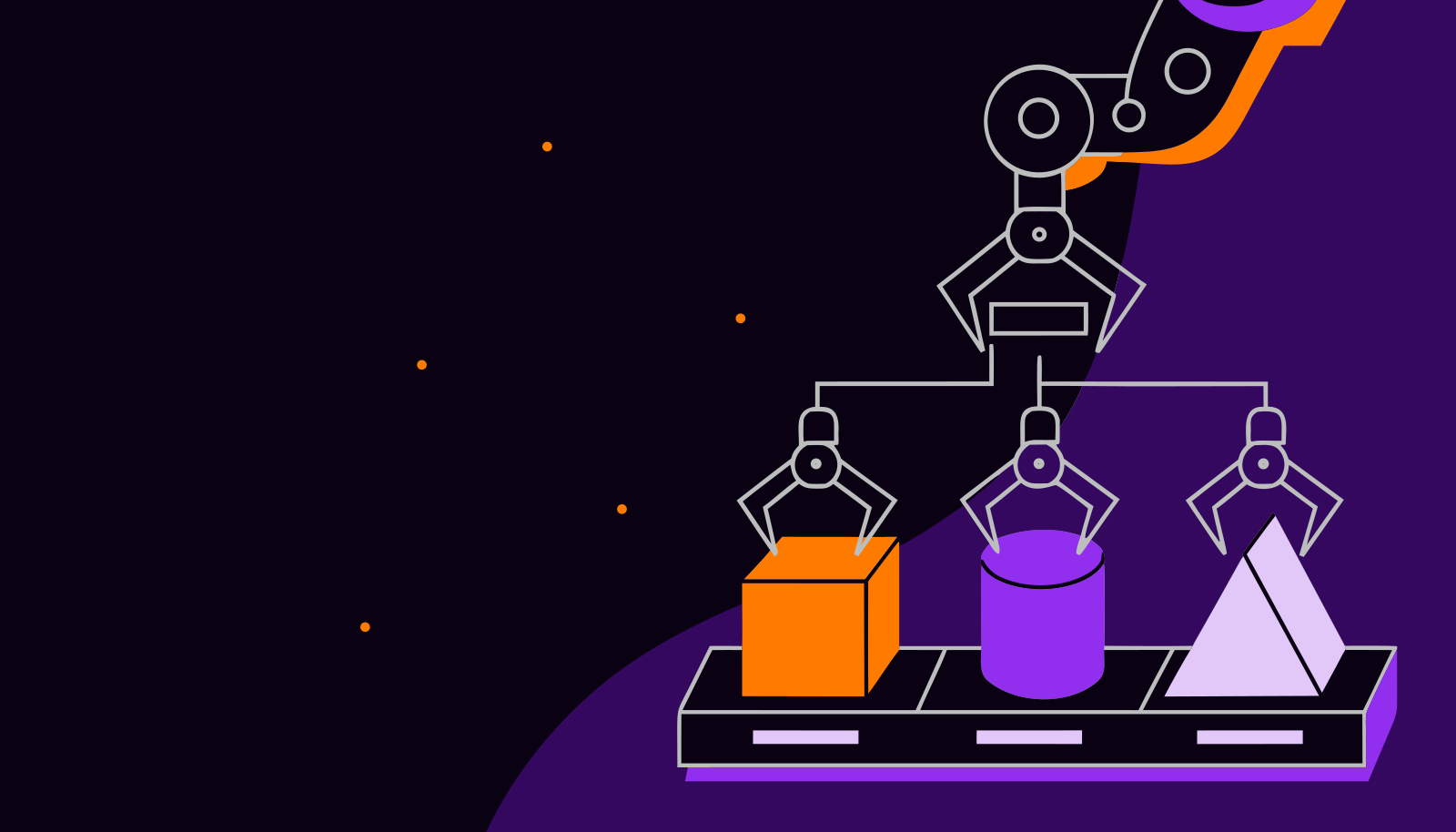
Multi-agent AI is a system where several agents, each with its own role, tools and instructions, work together on one task. An orchestrator agent breaks the request into parts, hands them to specialists, collects their answers and assembles the final result. It’s the difference between an overloaded generalist and a small team with a coordinator.
If the idea of an agent is still fuzzy, start with what AI agents are and the difference between an agent and a chatbot. The question here is different: what changes when there’s more than one agent in the room.
Why does a single agent start to fail?
An agent is a language model with tools and a goal. It plans, calls a tool, reads the result and decides the next step. That works well while the task fits in its head. Three things break it:
- A crowded context. Every table, API response and previous step takes up room in the context window. With many sources, the original instructions lose weight and the agent starts mixing up periods and metrics.
- Too many tools. An agent with 40 tools available picks the wrong one more often than one with 6. Vague instructions (“analyze everything”) lead to vague decisions.
- Serial work. If a task has independent parts, a single agent does them one at a time. Four two-minute queries become an eight-minute wait.
When two of these three show up together, splitting the work usually justifies the cost. When none show up, one good agent does better and cheaper.
How multi-agent orchestration works
Orchestration is the rule for who does what, in which order, and who has the final say. There are sophisticated variations, but almost everything running in real companies falls into three patterns.
Sequential (assembly line)
Agent A hands off to B, which hands off to C. Example: one agent pulls campaign data, another cleans and standardizes names, a third writes the report. It’s the easiest to debug, because you know exactly where the error came in.
Parallel with a coordinator
The orchestrator launches several specialists at once and merges their answers. It suits questions that cut across teams, like “why did profit drop when sales went up?”. Media, sales and finance investigate in parallel; the coordinator connects the dots.
Supervisor with review
One agent executes and another checks before anything is delivered or done. This is the right pattern when the agent will touch something real: pausing a campaign, changing a budget, messaging a customer. The reviewer catches the obvious mistake the executor missed, and a human approves anything above a set threshold.
Multi-agent AI in practice: one example per team
Examples beat definitions. Picture an online cosmetics store doing about US$ 150,000 a month, with a three-person marketing team and an outsourced finance function.
| Team | Question that overwhelms one agent | How multiple agents split it |
|---|---|---|
| Marketing | Which channel brought profitable customers this month? | One agent reads paid media, another reads orders and repeat purchases, the orchestrator matches CAC with margin by channel. |
| Sales | Why did the close rate drop? | One agent analyzes the CRM by stage, another lead sources, a third the team’s response time. |
| Finance | Can cash flow handle doubling ad spend for Black Friday? | One agent forecasts sales, another checks payables and inventory, a reviewer tests the assumptions before answering. |
Notice that no specialist needs to know everything. The media agent doesn’t need to understand supplier lead times. That’s what keeps each one accurate: small context, few tools, a clear goal.
How much does running several agents cost?
Here’s the trade-off few people mention. When Anthropic described the multi-agent system behind Claude’s research feature, it published two numbers that belong together: the multi-agent setup outperformed a single agent by 90.2% on its internal research evaluation, and it used about 15 times more tokens than a regular chat (Anthropic, June 2025). The same post admits that tasks where every agent must share the same context, and most coding tasks, benefit far less from splitting.
In a simple simulation (illustrative numbers, not research): if a question answered by chat costs US$ 0.04 in compute, the same question in a multi-agent system might cost around US$ 0.60. Asked 40 times a month, the bill goes from US$ 1.60 to US$ 24. For an analysis that decides where US$ 10,000 of ad spend goes, that’s cheap. For “how many leads came in yesterday?”, it’s waste.
My rule: multi-agent for questions that are expensive to get wrong and cut across teams; a single agent for direct, repetitive lookups.
When not to use multi-agent AI
Gartner predicts that over 40% of agentic AI projects will be canceled by the end of 2027, due to rising costs, unclear business value and weak risk controls (Gartner, June 2025). In the same analysis, it estimated that only about 130 of the thousands of vendors calling themselves “agentic” deliver real agents. Building a multi-agent architecture before there’s a clear problem is a fast way to end up in that statistic.
Skip it when:
- the task fits in one query and there are few sources;
- your data isn’t integrated or trustworthy yet (ten agents reading the wrong spreadsheet produce ten consistent mistakes);
- nobody can name the decision the system will improve.
If that’s where you are, the shortest path is to implement one agent first, measure the gain, and only then split the work.
How to start without coding
You can build multi-agent setups in visual tools like n8n, or use platforms that ship with specialist agents ready to go. This comparison of tools for building AI agents helps you choose. Either way, this sequence works:
- Pick a recurring business question that takes hours today and spans two or more sources.
- List the specialists a human team would use to answer it. Each one becomes an agent with a few tools.
- Define the orchestrator: what it asks each specialist and how it merges the answers.
- Add a reviewer or human approval before any action that touches money.
- Compare cost and accuracy against the single-agent version for four weeks.
Frequently asked questions
What is a multi-agent AI system?
It’s a group of AI agents with different roles collaborating on a task. Usually an orchestrator splits the work, specialists handle each part with their own tools, and the orchestrator combines everything into a final answer or action.
What’s the difference between an AI agent and multi-agent AI?
A single agent solves the task alone, with every tool and all context in one place. Multi-agent systems split the task among specialists, which improves accuracy on broad problems but raises cost and complexity.
Can you build multi-agent AI in n8n?
Yes. n8n lets one agent call other agents as tools, which reproduces the coordinator-with-specialists pattern. The hard part isn’t technical: it’s defining each agent’s role and limits clearly.
What does the orchestrator agent do?
It interprets the request, decides which specialists to call and in what order, passes each one only the context it needs, and consolidates the answers. In systems that take real actions, it also decides what needs human approval.
Fewer agents, better questions
The multi-agent conversation usually revolves around how many agents you have. The useful question is different: which company decisions depend on combining data that lives in separate places today, and what it costs to get them wrong. Architecture comes second. In Sherlok, that split is already built in: specialist agents for media, sales and finance read your connected sources, and you just ask a question in plain language and get the cross-source analysis back.
Your AI agents already know what to do in your account.
Turn them on free, no credit card.
- No credit card
- Read-only access
- Revoke it any time