
Practical Guide: AI in Business Decision-Making

In a time when data grows exponentially and market demands change rapidly, business decisions require solid technological support to gain agility, accuracy, and consistency. Behind this scenario is artificial intelligence, also known by its variations such as intelligent systems, machine learning algorithms, and autonomous agents. More than a trend, AI has already gained strategic space, allowing companies, even those with low technical maturity, to transform dispersed information into a competitive advantage.
Artificial intelligence is changing the way companies see and interpret their own data.
This practical guide connects concepts, examples, and steps to make AI a clear and accessible ally in your business decision-making.
What is artificial intelligence and why does it change decisions?
Artificial intelligence involves the use of computers and algorithms that simulate the human ability to learn, identify patterns, make predictions, and even recommend actions. With different techniques, such as machine learning, generative models, and neural networks, intelligent systems are capable of understanding large volumes of structured and unstructured data, processing them faster than any human could.
This technological resource not only accelerates analyses but also reduces errors, eliminates subjective biases, and suggests alternatives previously invisible to traditional logic.
According to research from the University of São Paulo (USP), there are still few documented studies on the use of AI for strategic decisions, but its potential to support complex environments and large data flows is undeniable.
How can AI help in the daily routine of companies?
Artificial intelligence impacts several sectors, from financial and operational to marketing, sales, and human resources. The central role of AI is to transform the raw volume of information stored in spreadsheets, CRMs, databases, and commercial tools into direct answers to everyday problems.
- Predictive analysis: identifies past patterns to estimate future results, such as sales or customer behavior.
- Report automation: compiles information from various departments, automatically delivering dashboards and graphs.
- Actionable recommendations: points out suggestions for adjustments in campaigns, prices, inventories, or internal processes.
- Anomaly detection: alerts about deviations from the standard in operations, helping to prevent losses before they occur.
In practice, Sherlok illustrates these benefits well: the platform integrates multiple sources, from ads to spreadsheets, passing through marketing systems and databases, cross-references data without requiring programming, and offers automatic analyses and alerts that save hours of manual work.
 The technical concepts that make AI work
The functioning of AI in companies is based on some key technologies:
Machine learning
Machine learning is the basis of systems that "learn" from examples and past experiences. Programs of this type can train on historical sales, marketing, or operations data, adjusting their predictions as new information comes in. If before it was necessary to examine all spreadsheets carefully, now it only takes a few seconds for an algorithm to suggest which products are most likely to sell out, which customers require attention, and which metrics are deviating from expectations.
Generative models
Generative models have expanded the horizons of AI by creating texts, images, strategies, or arguments from simple instructions. In the business world, they serve to generate scenario simulations, create automatic meeting summaries, or even elaborate answers to recurring customer questions.
Autonomous agents
When it comes to autonomous agents, the highlight is the complete automation of repetitive or complex tasks. In corporate scenarios, it is possible to configure agents that align communication between departments, schedule meetings, send reports, or even perform actions suggested by AI itself, without the need for constant human intervention.
Integration with internal systems: CRM, spreadsheets, databases, and marketing
The main differential of modern artificial intelligence solutions like Sherlok is their ability to connect with systems that are already part of companies' daily routines.
- CRM (Customer Relationship Management): By combining customer data, contact history, sales expectations, and contract patterns, AI can indicate which prospects should be prioritized and which approach is most likely to succeed.
- Spreadsheets and databases: Even teams that rely on Excel or simple SQL databases can take a leap. By integrating this data with an AI platform, reports and summaries are delivered automatically, highlighting points of attention.
- Digital marketing and ads: Connected tools suggest campaign adjustments based on metrics such as cost per click, conversion rate, and engagement, as well as alerting to unexpected variations.
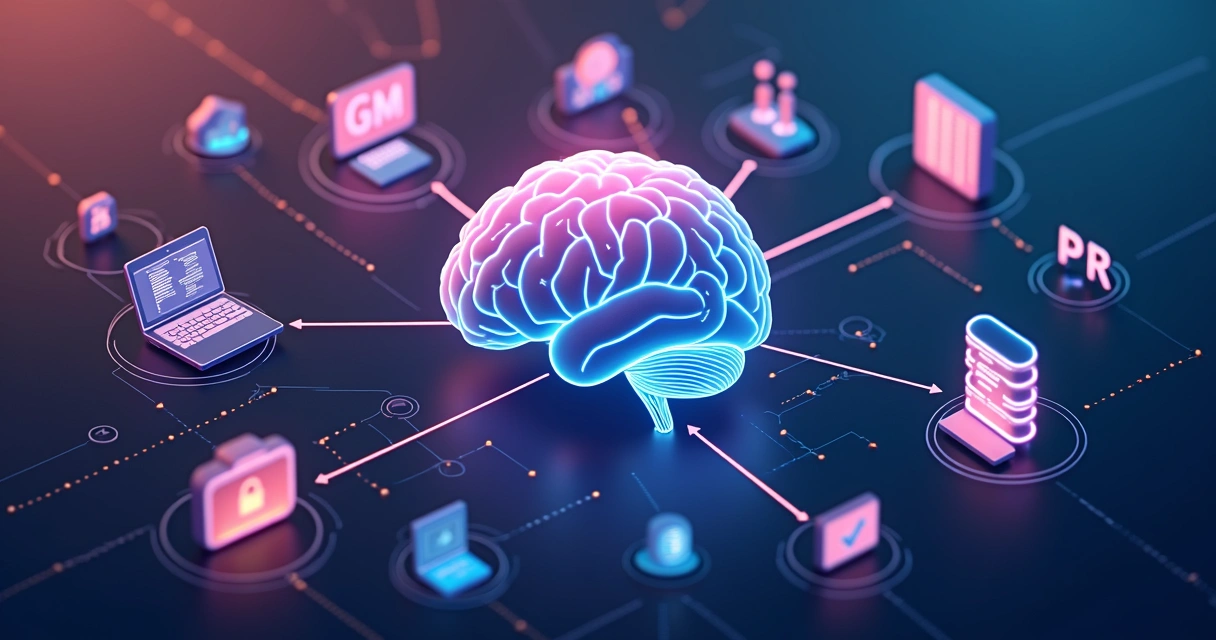 According to experiences documented in articles on business data integration and analysis, the ability to combine different sources, visually and without reliance on programmers, enhances the interpretive power of teams.
Practical cases: AI bringing advantage to different areas
Turning this conversation into clear examples helps understand the real potential for common departments in companies:
Marketing and sales
Insightful reports and analyses are produced effortlessly, gathering data from campaigns, sales funnels, and conversion rates into smart dashboards. Tools like Sherlok can trigger suggestions for new strategies, automatically pointing out underutilized channels or higher-return audiences. This transforms trial-and-error marketing into an action focused on measurable results.
Financial
In a few seconds, intelligent systems identify cash flow trends, anticipate default risks, and cross-reference banking data with transaction histories. Automatic alerts notify the manager about payments that deviate from the pattern, enabling quick action before problems escalate.
The time manually invested to stop, think, and calculate can be invested in planning.
Operations and logistics
AI connects information from suppliers, inventories, and transportation. With forecasting features, it shows how demand fluctuations will affect purchased volumes or deliveries. While it used to be difficult to anticipate a bottleneck, artificial intelligence shows alerts as soon as indicators point to future problems.
Automation beyond analysis: actionable recommendations
The difference between analyzing information and translating it into action has become smaller with the advancement of intelligent systems. Modern platforms suggest what to do: reduce investments in an inefficient channel, renegotiate with a supplier, change product prices based on demand forecasts, or even reformulate customer service team schedules.
Many of these recommendations can already be automatically executed by evolving intelligent agents, making repetitive decisions increasingly faster and less prone to human error.
This scenario is no longer restricted to large corporations or teams with data scientists: it is accessible through intuitive solutions, with a visual interface, that do not depend on programming, as highlighted in practical guides on data analysis with AI.
No coding: democratizing AI in everyday corporate life
In the past, implementing intelligent automations required technical teams and high costs. Now, platforms like Sherlok offer visual and intuitive integration, dragging blocks, connecting data sources, configuring alerts, and obtaining recommendations without a single line of code.
- People without technical experience can create dashboards and configure intelligent alerts.
- Teams of different sizes gain independence to quickly test and adjust automations, favoring strategy changes with less bureaucracy.
- Visual integration encourages greater collaboration between areas, as understanding information becomes more accessible.
 Ethics, transparency, and trust in intelligent solutions
While artificial intelligence brings clear gains, questions arise about ethics, responsibility, and transparency. How to ensure that an analysis is not biased? How is customer data used to make decisions?
It is the role of companies to adopt data governance practices, audit results, and ensure that intelligent systems do not perpetuate involuntary discrimination. A reliable system needs to be auditable, explainable, and adjustable. Studies such as those from USP show that this ethical concern, still in its early stages in Brazil, is expected to grow along with the use of corporate AI.
Companies that adopt intelligent solutions transparently build trust among employees, customers, and partners, strengthening their reputation and long-term sustainability.
Challenges and paths for gradual AI implementation in business
Despite its attractiveness, the implementation of artificial intelligence faces obstacles. The main barriers identified by business leaders and research on the topic include:
- Organizational culture: Changes are not always well received at first. Involving teams, communicating benefits, and promoting training are part of the process. Sharing internal experiences increases acceptance.
- Data quality: To predict, analyze, and recommend correctly, the information base needs to be organized, clean, and updated. Often the biggest challenge lies in standardizing processes and ensuring the integrity of these records.
- Complementation (not substitution): Artificial intelligence works best as a complement to human expertise. Teams remain indispensable for defining strategies, validating hypotheses, and adapting recommendations to the business reality.
According to a survey discussed in specialized publications on machine learning, a gradual approach, starting with specific problems and expanding as teams master the new logic, is one of the most recommended ways for adoption.
The near future: the role of autonomous agents
While today artificial intelligence supports decisions and recommendations, the advancement of autonomous agents already allows for the direct execution of suggested tasks. Imagine a system that not only indicates opportunities for adjustment in a marketing campaign but also activates the change, monitors results, and automatically readjusts according to data fluctuations.
This future is closer than imagined. Soon, companies that already integrate real-time data with platforms like Sherlok will have access to intelligent agents that execute tasks from start to finish, further accelerating market response.
Practical steps to start applying AI in daily life
Implementing artificial intelligence in operations depends on organization, choosing the right tools, and aligning teams:
- Map the most frequent problems: Asking "which report consumes hours every week?" or "which decisions generate constant doubts?" helps prioritize where to start.
- Organize internal data: Review spreadsheets, databases, CRM records, and ensure a minimum level of standardization to feed intelligent systems.
- Choose a platform that doesn't require programming: Tools like Sherlok simplify connecting sources, allowing you to start even without a technical team.
- Train teams and experiment: Promote quick tests with machine learning resources applied to real problems, adjusting the approach as results appear.
- Measure and improve: Monitor improvements and benefits, sharing learnings and adjusting new demands as they arise.
Many of these steps are detailed in materials on Big Data, integration, and decision-making, which show how technology fits into existing routines.
Conclusion: AI as an ally for business growth
Artificial intelligence has ceased to be a distant promise and has become an everyday resource for agile, secure, and precise decision-making. Companies that adapt their routines, organize their data, and implement accessible solutions, such as Sherlok, gain not only a competitive advantage but also more time to innovate and better serve their customers.
More than technology, AI brings new eyes to businesses, revealing opportunities and problems in advance, transforming data in motion before it becomes history.
Now is the time to understand how artificial intelligence can support the growth of your business. Learn about the Sherlok platform and see how integrated data analysis and intelligent recommendations can transform your company's results.
Frequently asked questions about AI in business decision-making
What is artificial intelligence in business?
Artificial intelligence in business refers to the use of systems capable of performing tasks that would normally require human analysis, such as recognizing patterns, predicting results, suggesting actions, and automating operations. This technology can support decisions in areas such as marketing, sales, finance, and operations, usually connecting different company data sources to present fast and reliable analyses.
How to apply AI in decision-making?
The application involves organizing company data, choosing a user-friendly tool that doesn't require programming, identifying repetitive processes or recurring doubts, and allowing intelligent systems to help analyze information, produce automatic reports, and present recommendations that can be tested and validated by teams. Platforms with visual integration, like Sherlok, facilitate this daily use.What are the benefits of using AI?
Key benefits include faster analyses, reduced human errors, time savings in operations, elimination of subjective biases, anticipation of problems, and generation of quick insights and suggestions for better decisions. Additionally, AI allows companies of different sizes to access advanced analyses even without robust technical teams.
What are the challenges of implementing corporate AI?
The biggest challenges involve the need to organize and standardize data, change internal culture to accept automations, ensure transparency in processes, and complement human expertise with technology, without replacing team judgment. It is also necessary to ensure data privacy and audit intelligent systems to avoid unwanted biases.
Is it worth investing in AI in the company?
Yes, investing in artificial intelligence can bring significant gains for companies of all sizes, mainly due to saved time, increased control over data, and the ability to act based on reliable and updated information. Returns usually appear gradually, as teams gain confidence in using the systems and identify new automation possibilities.
Your AI agents already know what to do in your account.
Turn them on free, no credit card.
- No credit card
- Read-only access
- Revoke it any time