
Business Process Automation: A Practical Guide and Applications

A company's routine often accumulates repeated tasks, scattered spreadsheets, data in different systems, and delayed decisions. This scenario is still common, but it's changing. Business process automation has gained traction because it helps replace manual work with connected workflows, clear rules, and faster responses.
Business process automation is the use of technology to execute recurring activities with less human intervention and more control.
In the past, this movement was limited to simple routines, such as sending emails or updating registrations. Today, the combination of integrations, RPA, and artificial intelligence has greatly expanded its reach. A process can retrieve data from a CRM, cross-reference paid media numbers, consult spreadsheets, read a database, and generate alerts in a few seconds.
This is where solutions like Sherlok naturally come into play. By bringing different sources into a single environment and transforming scattered data into practical insights, the platform brings technology closer to the daily lives of teams who don't want to rely on programming to work better.
How this Scenario Evolved
For a long time, companies treated technology as operational support. The system recorded. The team interpreted. Then acted. This cycle was slow. In many cases, the problem wasn't even a lack of data. It was an excess of unconnected information.
With the advancement of integrations and AI, the role of technology changed. Now, it can identify patterns, trigger actions, suggest next steps, and warn when something goes wrong. A marketing manager, for example, no longer needs to open multiple tabs to understand a drop in leads. The process can consolidate sources, compare periods, and pinpoint the probable cause.
Less searching. More answers.
This change also led automation to areas beyond marketing and IT. Finance, sales, customer service, operations, and HR began to adopt connected workflows. The gain isn't just in time. It's in consistency.
- Reduction of rework caused by manual entry.
- Fewer failures in data transfers between teams.
- More real-time visibility into indicators.
- Standardization of routines that previously depended on memory.
When the process becomes clear, management also matures. And that opens space for better decisions.
Where Automation Appears Most in Companies
Use cases usually start at points that generate a lot of manual effort. Data integration is one of the strongest examples. Many companies simultaneously work with CRM, ad platforms, marketing tools, spreadsheets, and databases. When these pieces don't communicate, someone has to manually bridge the gap.
Integration between platforms prevents the company from wasting time copying, pasting, and checking data in various systems.
In practice, this can appear in several ways:
- Leads captured in campaigns automatically enter the CRM.
- Sales data feeds marketing reports without manual updates.
- Spreadsheets receive information from internal systems.
- Alerts are sent when goals, budget, or ticket volume deviate from the standard.
Companies looking to mature this process often benefit from studying content on data integration between systems and on webhooks and real-time automatic integrations, as this type of connection reduces delays and increases control.
Another frequent use is the generation of automatic insights. In this case, the system not only moves data. It interprets signals. If the cost per acquisition rises, if the conversion rate drops, or if churn increases, the tool can alert and even suggest a course of action. Platforms like Sherlok move precisely in this direction by transforming complex data into clear analyses for different areas of the company.

RPA, AI, and Intelligent Workflows
Not all automation is the same. There are clear differences between simple rules, RPA, and artificial intelligence. Understanding this avoids bad choices.
RPA, or robotic process automation, is indicated for repetitive tasks with defined steps. A robot can open systems, copy fields, fill out forms, and record information tirelessly. It is useful when the company still relies on software that does not have direct integrations.
AI comes in when the process requires reading, context, or prediction. It can classify messages, summarize reports, detect deviations, forecast demand, and recommend actions. Instead of just repeating steps, it helps interpret data.
RPA replicates human actions in structured tasks, while AI expands the ability to understand and respond to more variable situations.
A simple example helps. Imagine a commercial operation. RPA collects proposal data, updates the system, and organizes the history. AI reads funnel behavior, finds bottlenecks, and suggests where the team can act to improve conversion. Together, the two resources form a more mature foundation.
This combination also appears in data pipeline projects for integration and agile reading and in the use of machine learning applied to business decisions, especially when the company wants to move from static reports to signal-driven management.
Processes Worth Automating First
It doesn't always make sense to start with the most ambitious project. In general, the best results appear when the company chooses predictable, repetitive processes linked to clear goals. There's a pattern to this. These are routines that consume hours, generate human error, and depend on multiple validations.
The most common cases include:
- Lead registration and enrichment.
- Distribution of contacts to the sales team.
- Data reconciliation between finance and sales.
- Sending recurring reports to managers.
- Monitoring campaigns and budget.
- Opening and forwarding tickets.
- Updating inventory and orders.
An operations director often realizes this potential when they notice that three people, every day, perform the same verification in different systems. The cost appears in wasted time, delays, and the chance of error. When the workflow is connected, this effort decreases.
The best process to automate first is one that combines high volume, clear rules, and direct impact on business results.
For those who want to delve deeper into the topic, the content category on automation helps to identify priorities and possible applications in different areas.
How to Choose Tools Without Relying on Programming
A common barrier is the fear of technical complexity. Many companies still believe they can only advance if they have a dedicated development team. This is not always true. Today, there are platforms that offer visual interfaces, ready-made connectors, and configurable rules without code.
When choosing a solution, it's worth observing a few points:
- What data sources need to be connected.
- If the interface is simple for non-technical areas.
- How alerts and reports are configured.
- If there is an audit trail and history of actions.
- How easy it is to scale after the first workflow.
It's also worth checking if the tool helps transform data into practical insights, not just technical movement. Sherlok stands out in this aspect because it combines integration, analysis, and recommendations in an environment designed for business decisions. This reduces the gap between raw data and action.
Best Practices for Implementation Without Creating Confusion
Implementing technology without a method can exchange one problem for another. Therefore, companies usually achieve better results when following a simple and realistic order.
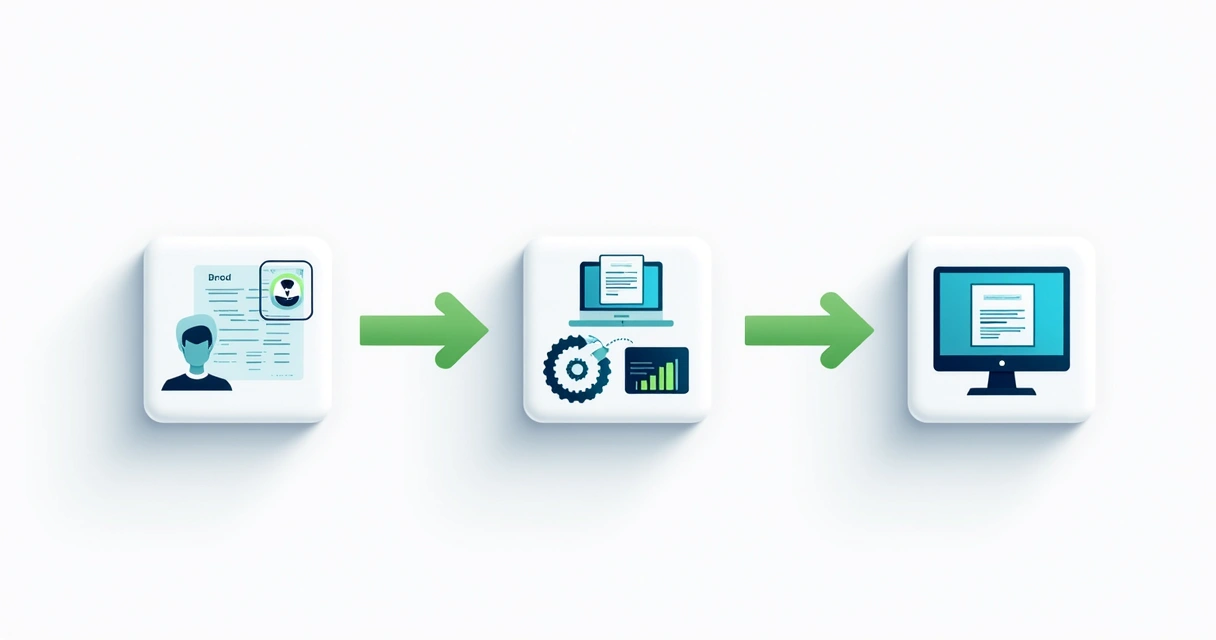
First, map the current process. Then, identify failures, delays, and dependencies. Next, define objective goals, such as reducing report closing time or accelerating initial service. Only then choose the tool and set up a pilot.
Helpful best practices:
- Start small and validate one workflow before expanding.
- Involve the teams that execute the routine daily.
- Record rules, exceptions, and responsibilities.
- Measure before and after implementation.
- Review the process periodically.
Well-implemented automation is not just technology. It's a clear process, defined goals, and constant monitoring.
Another useful precaution is against an excess of isolated automations. When each area creates workflows without a standard, the company gains local speed but loses sight of the whole. Ideally, projects should align with business strategy, with minimal governance and shared indicators.
Alignment with Strategy and Competitive Advantage
Not every automated workflow generates real impact. A company might accelerate irrelevant tasks and remain slow in what truly drives revenue, margin, or customer service. Therefore, the discussion shouldn't start with the tool. It should start with business priorities.
If the goal is to sell better, lead generation, qualification, and sales follow-up workflows deserve attention. If the focus is on margin, it makes sense to look at purchasing, finance, and forecasting. If the pain is in customer experience, customer service and after-sales come first.
Automating without direction generates noise.
When alignment happens, gains appear in concrete points:
- More control over indicators and bottlenecks.
- Faster response to operational deviations.
- Less dependence on manual tasks to finalize analyses.
- Greater ability to compete with a lean structure.
This vision is even stronger in data-driven companies. After all, deciding based on updated numbers changes the pace of management. And, in many cases, this is when the organization realizes it doesn't just need dashboards. It needs context, alerts, and practical recommendations.
Trends Already Changing the Landscape
The next step in this evolution is hyperautomation. The term refers to the combined use of integrations, RPA, AI, analytics, and continuous monitoring to create increasingly autonomous operations. It's not about a single feature. It's about the union of several layers.
Hyperautomation is the connection between processes, data, and intelligence to create broad, continuous, and increasingly autonomous workflows.
In this context, AI agents also emerge. They don't just point to an action. In controlled scenarios, they begin to execute routines, open tasks, respond to events, and act based on defined objectives. This movement tends to grow, and Sherlok itself projects a future with agents capable of executing recommendations generated by the platform.
For many, this still seems distant. But the transformation has already begun. It enters slowly, with an automatic alert. Then, with a recommendation. Next, with an authorized action. Before you know it, part of the operation is already running with much less friction.

Conclusion
Business process automation is no longer just a way to save time. Today, it helps connect data, reduce errors, provide context for decisions, and increase operational control. When well applied, it transforms manual routines into reliable workflows and gives management a clearer view of what's happening.
The best path is usually simple. Choose processes with real impact, integrate currently separated sources, start with objective goals, and grow consistently. Codeless tools, RPA, AI, and automatic analyses already allow this advancement in companies of various sizes.
For those who want to transform scattered data into faster and better-oriented decisions, it's worth learning more about Sherlok and understanding how the platform can connect systems, generate insights, and prepare the company for an increasingly intelligent operation.
Frequently Asked Questions
What is business process automation?
It is the use of technology to execute tasks and workflows with less manual action. This includes integration between systems, automatic rules, process robots, and AI features to read data, generate alerts, and support decisions.
How to implement automation in my company?
The most recommended path starts by mapping a repetitive process with a clear impact. Then, the company defines goals, chooses a tool compatible with its systems, creates a small pilot, measures results, and gradually expands. Codeless platforms greatly help in this stage.
What benefits does automation bring to businesses?
It reduces rework, decreases typing and data transfer errors, accelerates routines, improves indicator control, and offers faster responses for management. It also helps teams focus on activities of greater value to the business.
Is business automation expensive for small businesses?
Not always. Today there are accessible solutions and gradual implementation models. A small company can start with a few processes, such as lead capture, reports, or integration between spreadsheets and CRM. The cost tends to become more viable when the project starts with a focus on a real pain point.
Which processes are ideal for automation?
The best candidates are repetitive, rule-based, and high-volume processes. Common examples include contact registration, data updates between systems, sending reports, campaign monitoring, financial reconciliation, ticket opening, and sales follow-up.
Your AI agents already know what to do in your account.
Turn them on free, no credit card.
- No credit card
- Read-only access
- Revoke it any time