
AI agent examples: practical use cases by department
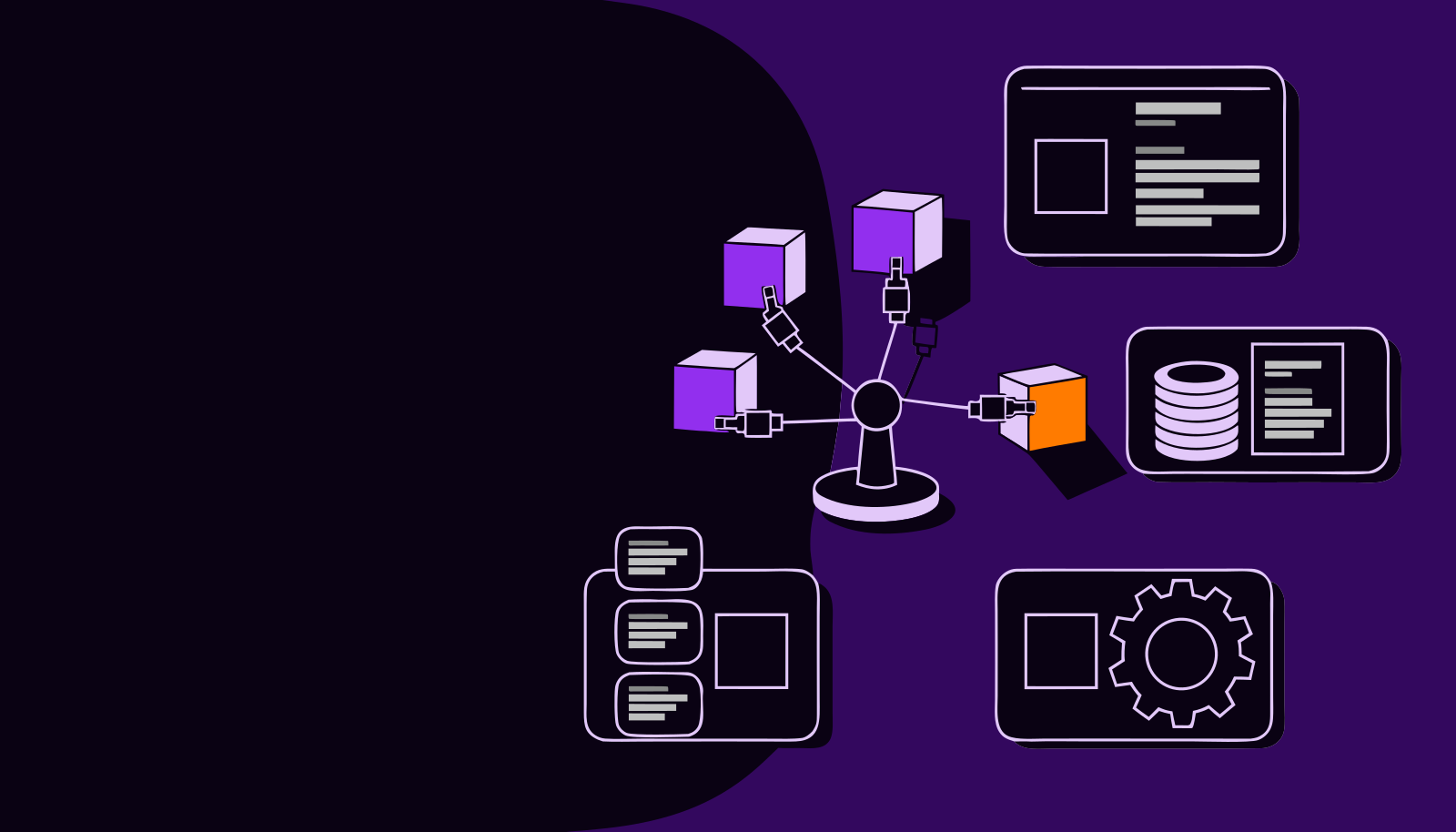
Monday, 8:12 a.m. Before her first coffee, the marketing manager of a clinic chain in Fortaleza already has three messages on her phone: a Meta Ads campaign blew past the agreed cost per lead over the weekend and was paused, the website form stopped sending conversions to GA4 on Saturday, and four hot leads have been sitting unanswered in the CRM for more than 24 hours. Nobody on the team worked on Sunday. An AI agent kept watch.
That kind of scene is what separates AI agents from conference-stage promises. Search for AI agent examples and you get plenty of generic lists ("an agent that answers customers", "an agent that writes emails") and very little a manager can copy the following Monday. This piece takes a different route: a map by department, showing the data each agent reads, the action it takes and the point where a person has to sign off.
Short answer: AI agents are systems that take a goal, query data and tools, and carry out steps on their own, asking for human approval at critical points. Practical examples: an agent that pauses ads whose CPA is above target, one that chases overdue invoices on WhatsApp, one that qualifies leads in the CRM and one that reconciles bank statements.
What makes an agent an agent (and not a chatbot)
The most common mix-up is calling anything that chats an agent. A chatbot answers when someone asks. An agent has a goal ("keep CPA under R$ 60"), access to tools (the Meta Ads API, the CRM, the targets spreadsheet) and a feedback loop: it checks the result of what it did and decides the next step. For the full comparison, see AI agent vs chatbot.
In practice, three questions settle it. Does it act without someone typing a request? Does it use data from more than one system? Does it know when to stop and call a person? If the answer is no to all three, you have an automation or an assistant. Useful, but a different thing. The concepts are covered in AI agents: what they are; from here on, the focus is application.
AI agent examples in marketing
Marketing is usually the first area to try agents for a simple reason: the data already lives in APIs (Meta Ads, Google Ads, GA4) and many actions are reversible. Pausing a campaign by mistake costs a few hours of delivery, not a customer.
Media watchdog agent
Every day it compares each campaign's cost per result with the target and with the trailing 14-day average. When a campaign breaks the limit two days in a row, it pauses it or trims the budget and tells the owner why.
A worked example: a company spends R$ 30,000 (about US$ 5,500) a month and has one campaign burning R$ 400 a day at a CPA of R$ 95 against a R$ 60 target. If the analyst only spots it in the ten-day review and the agent spots it on day two, that is an eight-day gap: R$ 3,200 that stops flowing into the wrong campaign and can be moved to the ones on target.
Data anomaly agent
Sudden drops are not always about performance. Often the pixel broke, a tag vanished in a deploy or someone changed the form's domain. This agent cross-checks sessions, events and conversions and tells "sales fell" apart from "tracking fell". It is the first step in any sales drop diagnosis, and the one that saves the most arguing in meetings.
Reporting agent
For agencies, it builds each client's weekly report, writes the commentary on the numbers and highlights what changed. The analyst reviews and sends. The gain is not just time but consistency: the smallest client's report gets the same care as the biggest one's.
AI agent examples in CRM and sales
In sales, agents pay off most when they handle what reps forget, not when they try to replace the conversation. Three cases that work well:
- Lead qualification: reads the form, looks up the company registration, matches it against the ideal customer profile, scores it and routes it to the right rep within minutes.
- Stalled-deal follow-up: finds opportunities with no activity for 7 or 14 days, drafts the next message from the history and nudges the deal owner.
- Meeting prep: before every call, pulls purchase history, open tickets and recent interactions into a half-page brief.
The boundary is clear: offering a discount or changing commercial terms should go through a person. More cases in AI for sales.
AI agent examples in finance
Finance is where agents produce the easiest return to measure, because the result shows up on the bank statement. It is also where mistakes cost the most, so the design needs guardrails.
Collections agent
It tracks overdue invoices and runs the dunning sequence: a friendly reminder the day after the due date, a fresh payment slip on day five, an alert to the finance team on day ten. It answers simple questions ("can you resend the invoice?") and escalates any renegotiation request.
A simulation: 600 invoices a month, 9% paid late (54 invoices), average ticket of R$ 480. If the automated sequence recovers half of them before they turn into bad debt, that is 27 invoices, or R$ 12,960 a month collected without anyone picking up the phone. The numbers are illustrative; your own late-payment history defines the real upside.
Reconciliation and cash agent
It matches bank statements against receivables and payables, flags mismatches and projects cash for the coming weeks. When the projection crosses a minimum threshold, it warns you ahead of time, not on the day the account is already in the red.
AI agent examples in operations and support
In operations, the best cases combine high volume with clear rules. Ticket triage is the classic: the agent reads the message, classifies it by type and urgency, answers what the knowledge base covers and forwards the rest with context. On WhatsApp, that handles a large share of repeated questions about opening hours, order status and payment slips.
In inventory, an agent can track turnover and coverage by SKU and suggest restocking orders before a stockout, using methods like those in demand forecasting. The purchase itself stays with the buyer, who gets a prioritized list instead of a spreadsheet to dig through.
| Area | Agent | Data it reads | Action | Where a person approves |
|---|---|---|---|---|
| Marketing | Media watchdog | Meta Ads, Google Ads, targets | Pauses, trims budget, alerts | Budget increases |
| Marketing | Data anomaly | GA4, pixel, CRM | Detects broken tracking | Tag fix |
| CRM and sales | Qualification | Forms, company data, CRM | Scores and routes leads | Criteria changes |
| Finance | Collections | Receivables, WhatsApp | Reminder sequence | Renegotiation |
| Finance | Cash | Statements, ERP | Reconciles and projects | Mismatched entries |
| Operations | Triage | Tickets, knowledge base | Classifies and answers | Serious complaints |
How many companies already use AI agents?
Fewer than the noise suggests, with a wide gap between large and small companies. In the 2026 edition of McKinsey's State of AI (1,719 participants, published August 2026), the share of organizations with revenue above US$ 1 billion scaling agents in at least one function rose from 27% to 40%. Among smaller organizations it stayed essentially flat at 22%. The most cited functions are IT, knowledge management and software engineering; in retail and consumer goods, marketing and sales.
A Google Cloud survey of 3,466 executives (September 2025) lists the most frequent uses: customer service (49%), marketing (46%), security (46%) and tech support (45%). The takeaway for a small or mid-sized company: the areas pulling ahead are precisely the ones with data available through APIs and reversible actions. That is no coincidence.
How to choose your company's first AI agent
The classic mistake is starting with the flashiest case. In practice, your first agent should be boring: a frequent task, data already organized, cheap mistakes. Two axes help you decide.
Frequent tasks with cheap mistakes (CPA alerts, invoice reminders) are the best starting point, because the agent learns fast and the team's trust grows with evidence. Frequent tasks with expensive mistakes (moving budget, granting discounts) call for an agent with approval: it prepares the decision, a person clicks. Rare, cheap tasks seldom justify an agent; a simple automation does the job. And what is rare and expensive, like renegotiating a key account's contract, stays with people.
Where AI agents fail in practice
The problem is almost never the model. It is the environment around it. The four reasons I see most often:
- Messy data: an agent reading inconsistent UTMs or a CRM with poorly defined stages makes wrong decisions with great confidence. Review data quality first.
- No stopping rule: if nobody defined when the agent should call a person, it won't.
- Too much autonomy too soon: granting execution rights on day one, before measuring accuracy, is the fastest way to get the team to switch the agent off.
- No owner: an agent without an owner becomes one more forgotten tool. Someone has to read what it did each week.
This approach breaks when a company tries to jump from "the agent suggests" straight to "the agent executes". Two or three weeks in suggestion mode, measuring how many recommendations the team would accept, saves months of distrust later.
Frequently asked questions
What are AI agents? What are some examples?
They are AI systems that pursue a goal using data and tools, carrying out steps without someone requesting each one. Examples: an agent that pauses campaigns whose cost is above target, one that qualifies leads in the CRM and one that runs the collection sequence for overdue invoices.
What is the difference between an AI agent and regular automation?
Automation follows a fixed script: if X, do Y. An agent interprets context, combines information from several systems and chooses among possible actions. That makes it better with exceptions, but it also needs limits and approval at sensitive points.
Can I use an AI agent on WhatsApp?
Yes, and it is one of the most searched uses in Brazil. Answering repeated questions, resending payment slips and collection reminders work well on WhatsApp Business, as long as the agent knows when to hand the conversation to a person.
Can small businesses use AI agents?
They can, and there is room: in McKinsey's survey, adoption among smaller organizations stalled while large ones moved ahead. The cheapest path is to start with tools that already connect your systems (ads, CRM, spreadsheets) instead of building an agent from scratch.
Do AI agents replace employees?
In the cases that work today, they replace tasks, not people: metric watching, repetitive collections, triage. The time freed up goes to analysis and relationships, which remain human. Companies that treat the agent as a supervised intern get more out of it than those that treat it as a replacement.
The most useful agent is the one that looks at your data before you do
Notice that every example above rests on the same foundation: marketing, sales and finance data connected and read every day. Without that, no agent will save you. That is the bet behind Sherlok: connect Meta Ads, Google Ads, GA4, your CRM and spreadsheets, let agents watch what matters, and ask questions in plain language to get the analysis ready, with the final decision always in your hands.
Your AI agents already know what to do in your account.
Turn them on free, no credit card.
- No credit card
- Read-only access
- Revoke it any time